


The History of Tartan — and Why We Wear It With Authority
There is a detail in the Christys' story that tends to surprise people. Our founder, Miller Christy, was born in Scotland in 1748. He served his apprenticeship in Edinburgh, learning what was formally described as the "Art and Mystery of Felt Making," before travelling south to establish his company in London in 1773. When Christys' works with tartan, it is not an English brand borrowing Scottish heritage. It is, in some sense, coming home.
Older Than the Myth
Tartan cloth has been found in Scotland as far back as the 4th century AD. Fragments of similar woven textiles have been dated to 3000 BC in locations as distant as Central Asia. The technique — threading coloured yarns through a warp and weft in a precise, repeating sequence — appears to be one of those things that human ingenuity arrived at independently, across many cultures, over many centuries.
What distinguishes Scotland is not the invention. It is the weight of meaning the cloth came to carry. No other culture took this textile and made it central to its identity, its resistance, and its grief.
"Our founder learned his craft in Edinburgh. When Christys' works with tartan, it is not an English brand borrowing Scottish heritage. It is, in some sense, coming home."
Before the Clans: Cloth of the Common People
It is easy to imagine the Highland landscape as a place of ordered heraldry, where every warrior's plaid announced his bloodline. The reality was rather more modest, and in its way more interesting.
For most of its early history, tartan was simply cloth. Local weavers produced it with whatever dyes the land provided — plant matter, bark, lichen — and so the colours varied by region. There may have been a quiet, local familiarity to certain patterns. But tartan as a formal declaration of clan identity, as a textile equivalent of a coat of arms, is an invention of a later age.
It emerged not from ancient tradition but from crisis.
Culloden and the Act of Proscription
The year 1746 changed everything. The Jacobite rising ended on the rain-soaked moorland of Culloden, and the British government moved swiftly to dismantle the culture that had sustained it. The Act of Proscription banned Highlanders from wearing tartan — not as an aesthetic preference, but as a political calculation. The cloth had become inseparable from clan loyalty, from Highland identity, from the idea of Scotland as something apart.
In trying to suppress it, they made it permanent.
The ban lasted until 1782. By the time it was lifted, tartan had acquired a gravity it might never have developed otherwise. Forbidden things gather meaning. What had been practical woven cloth became a statement of survival.
Clan tartans as a formal system are largely a 19th-century development, not an ancient tradition. Before Culloden, tartan was regional cloth with no fixed clan associations. The Act of Proscription of 1746 banned it entirely. After the ban was lifted in 1782, a cultural revival — and William Wilson & Sons' 1819 pattern book cataloguing 250 tartans — began the process of assigning specific patterns to specific clans and regions.
How the Names Were Given
The catalogue of clan tartans that most people assume to be ancient owes its existence largely to one commercially minded Bannockburn weaver. In 1819, William Wilson & Sons published a pattern book containing around 250 distinct tartans. Approximately 100 were named — for clans, towns, and regions across Scotland, gathered from wherever Wilson could source them.
Even then, the names were principally practical: a way to distinguish one sett from another in a ledger. The idea of tartan as sacred family inheritance came later still, accelerated by the romantic Highland revival of the early 19th century — Walter Scott's influential reimagining of Scottish culture, and the celebrated visit of King George IV to Edinburgh in 1822, draped in Highland dress. The military gave the cloth an entirely different register: the Black Watch tartan, worn by one of the oldest Highland regiments, became one of the most recognised textiles in the world.
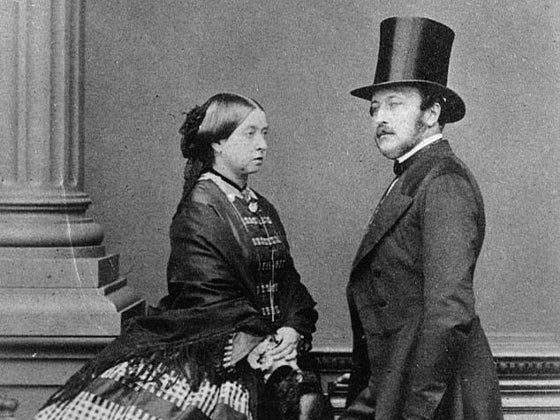
By the time Victoria and Albert built Balmoral and had it lined with tartan, the mythology was complete.
"In trying to suppress tartan, the government made it permanent. Forbidden things gather meaning."
The Cloth Itself
Set the history aside for a moment and consider the material on its own terms. Tartan is exceptional cloth. The twill weave — threads interlacing diagonally rather than at right angles — produces a textile that is dense without being heavy, warm without being stiff. It holds its structure, resists hard wear, and responds well to age in the manner of quality natural fibres.
The patterns themselves, known as setts, are built on mathematical logic: a sequence of coloured threads, repeated and reflected, producing the characteristic check. Within that geometry lies an almost limitless range of visual effect — from the near-midnight restraint of the Black Watch to the vivid declaration of the Royal Stuart.
It is a cloth that rewards looking at closely. The colours shift with the light. The geometry reveals itself gradually. It is, in other words, exactly the kind of material that Christys' has always been drawn to.
Six Tartans. Two Silhouettes. One Cloth Mill Since 1863.
The tartan for these pieces comes from a weaver whose history stretches back to 1863. In a landscape where provenance is often claimed and rarely substantiated, this is cloth with a verifiable lineage — the same setts, the same standards, maintained across more than 160 years of continuous production.
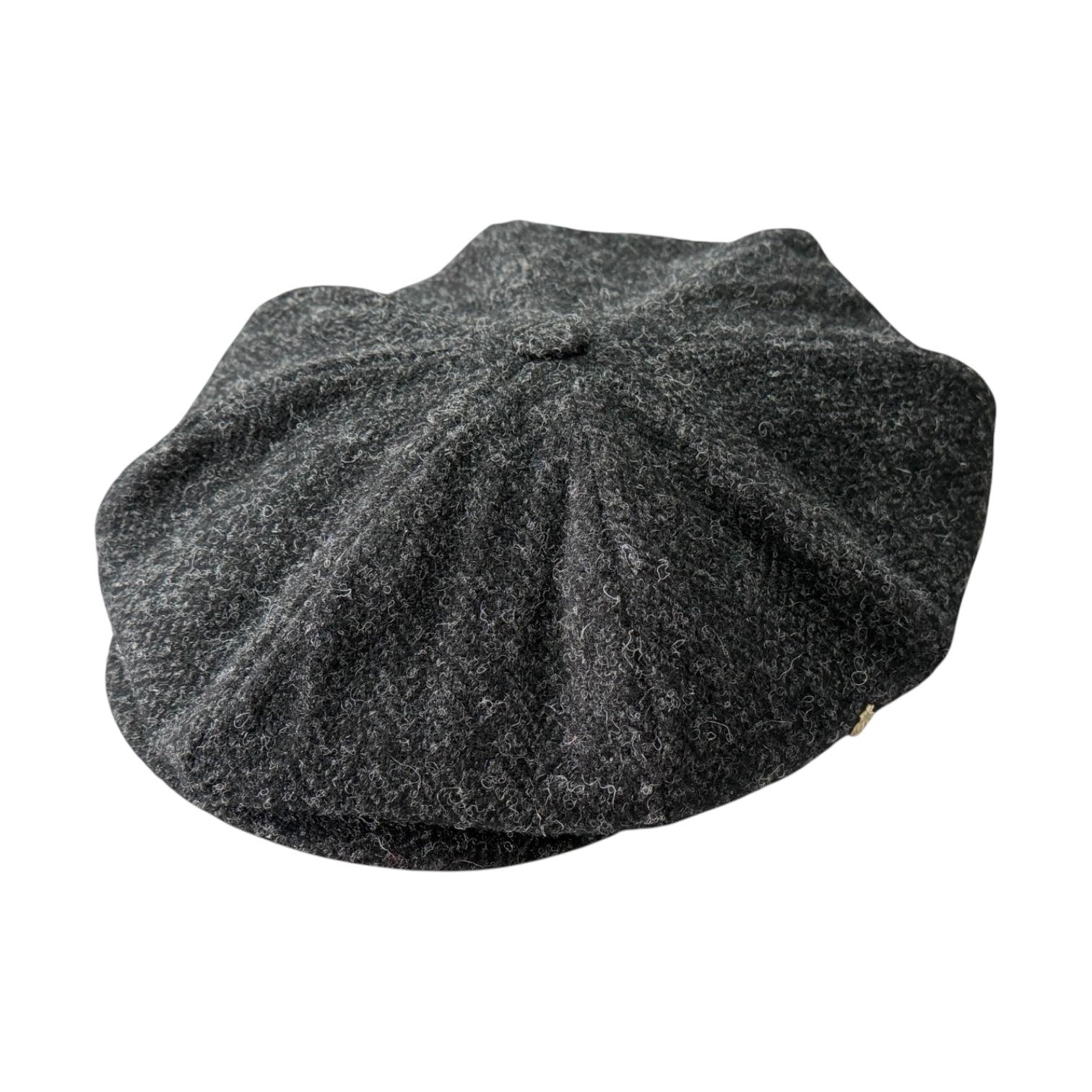
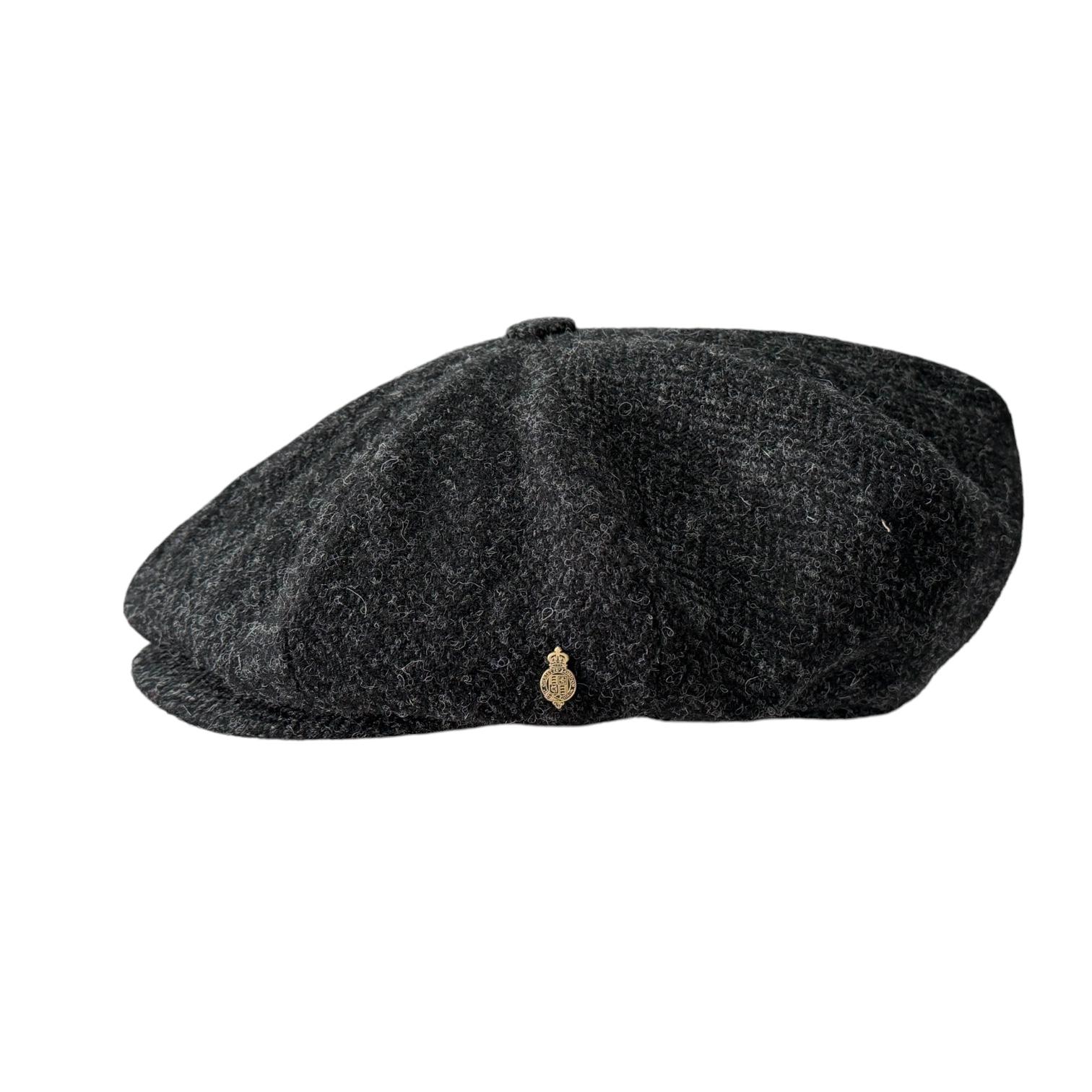
From that cloth, Christys' has made two pieces: a bucket hat and a flat cap. Both silhouettes are cut to allow the tartan's geometry to read clearly across the panels — the sett uninterrupted, the pattern intact. These are not decorative gestures toward heritage. They are hats made to be worn, in cloth made to last.
The six tartans


On Wearing Tartan Well
Tartan occupies a singular position in contemporary dress. It is unmistakably specific — you cannot wear it anonymously — and yet it moves between contexts with surprising ease. A flat cap in Antique Buchanan reads equally well in the country and in the city. A bucket hat in Royal Stuart makes its statement with clarity and a certain good humour about it.
The distinction between tartan worn well and tartan merely worn comes down, as it always does, to the quality of the cloth and the integrity of the construction. Tartan that is printed rather than woven, assembled without regard for how the sett falls across the panels, reads as costume. Tartan in a proper woven cloth, cut by people who know what they are doing, reads as something else entirely.
That distinction matters to us. It has mattered to Christys' since 1773 — when a young Scotsman from Edinburgh brought his understanding of felt and cloth south to London, and began building something that would outlast him by centuries.
Miller Christy, born in Scotland and apprenticed in Edinburgh in the "Art and Mystery of Felt Making," founded Christys' in London. Over 250 years later, the house he built continues to make hats with the same regard for cloth, construction, and the kind of quality that does not announce itself.