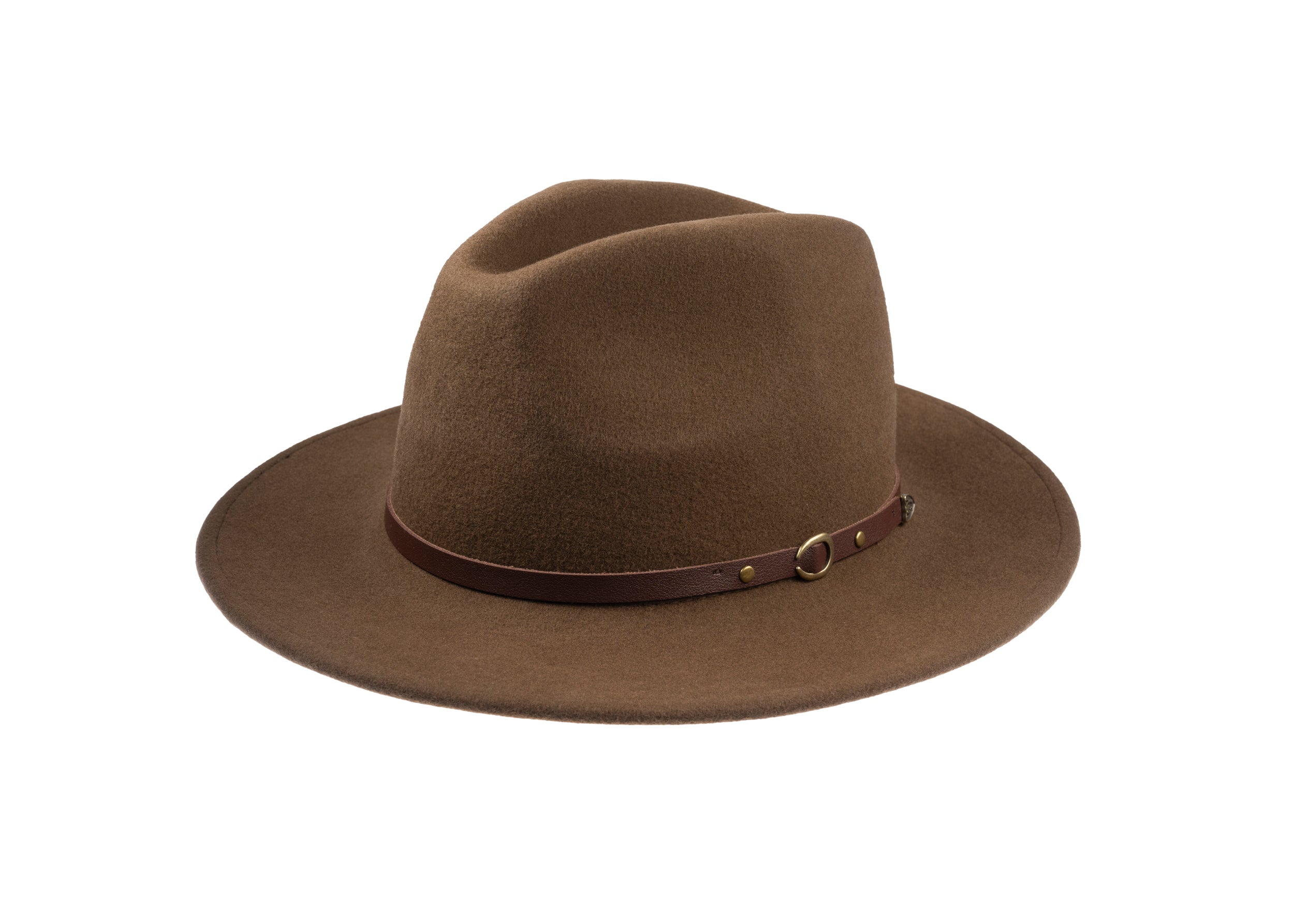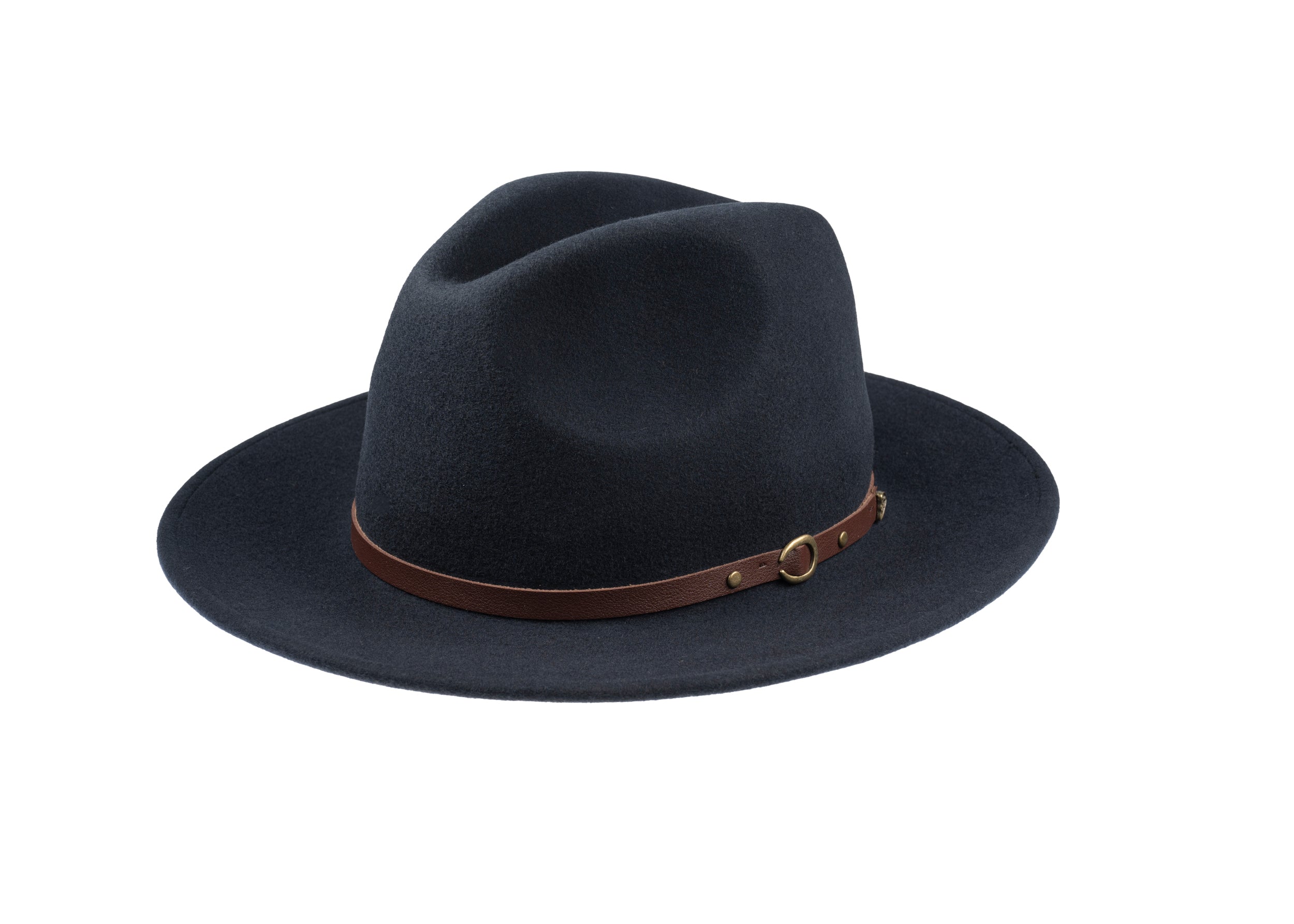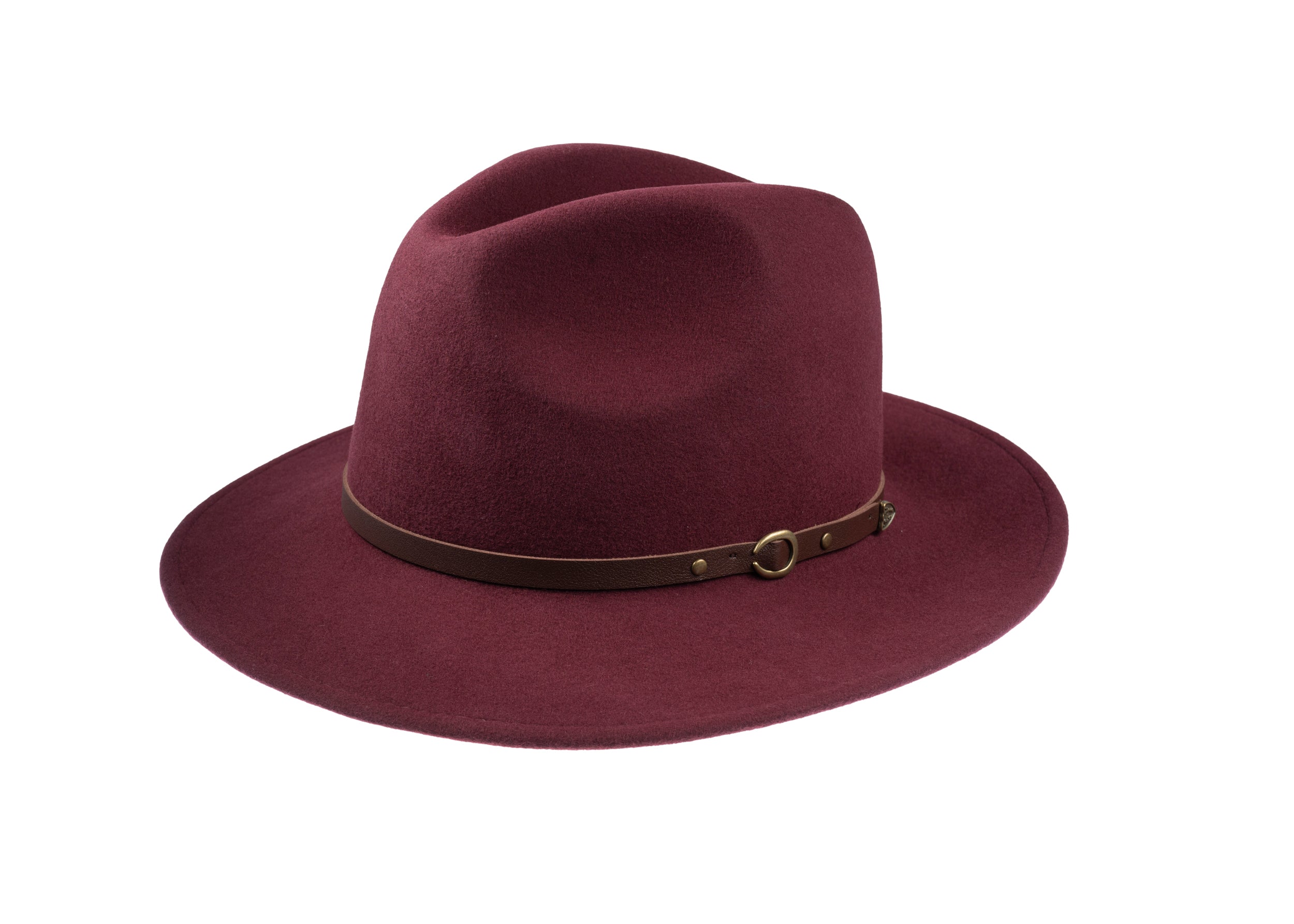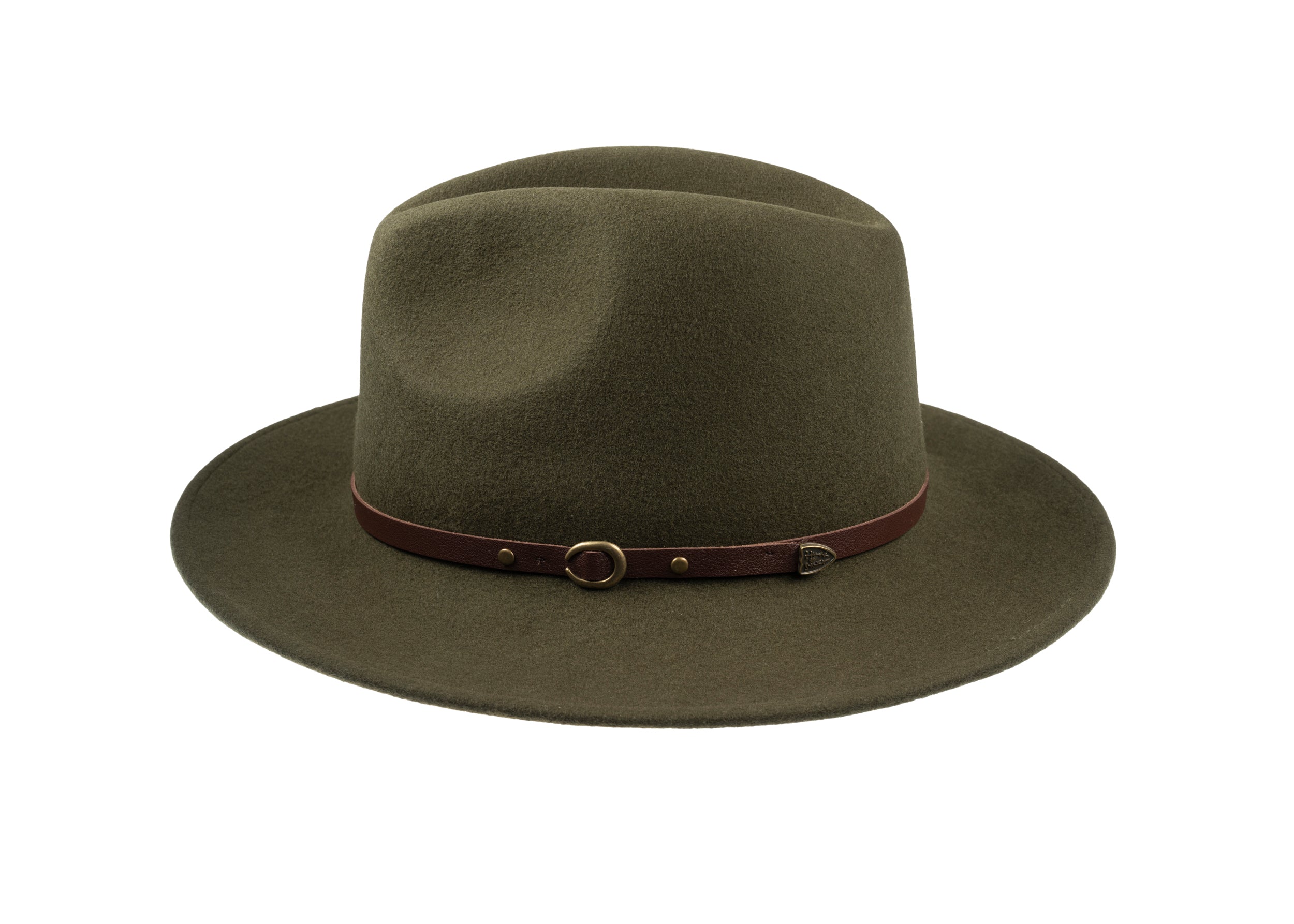





A hat travels best when the journey is planned around the hat itself. Before a train journey, flight or weekend away, look at the material, crown, brim or peak, and the product’s own care guidance. The safest choice may be to wear it, carry it separately, place it in a correctly sized box or leave it at home, rather than forcing every style into the same luggage routine.
Pressure, moisture and heat are the avoidable hazards. Christys’ guidance is simple: let the shape rest without pressure, allow dampness to dry naturally and do not assume that a flexible hat is designed to be folded. A deliberately packable style is different from a formal blocked or structured hat. The individual product description takes priority over any general travel advice.

Before packing: decide whether the hat should travel on you, beside you or in luggage
Start with a quiet inspection. Check for an already softened crown, a turned-up or wired brim, a sharp crease, a stitched band, a fixed peak or any decorative detail that could catch on clothing. Compare the hat’s actual width and height with the proposed box or carrier. The lid must close without touching the crown, brim or peak, and the hat must not be wedged against the sides.
Then choose the least pressurised option. Wear a sound, comfortable style when that is practical, particularly on a station platform or during a car journey. Carry it separately when you need to remove it, keeping it in your hand or under direct control. If you fly or use public transport, follow the carrier’s current rules for hand luggage and cabin storage.
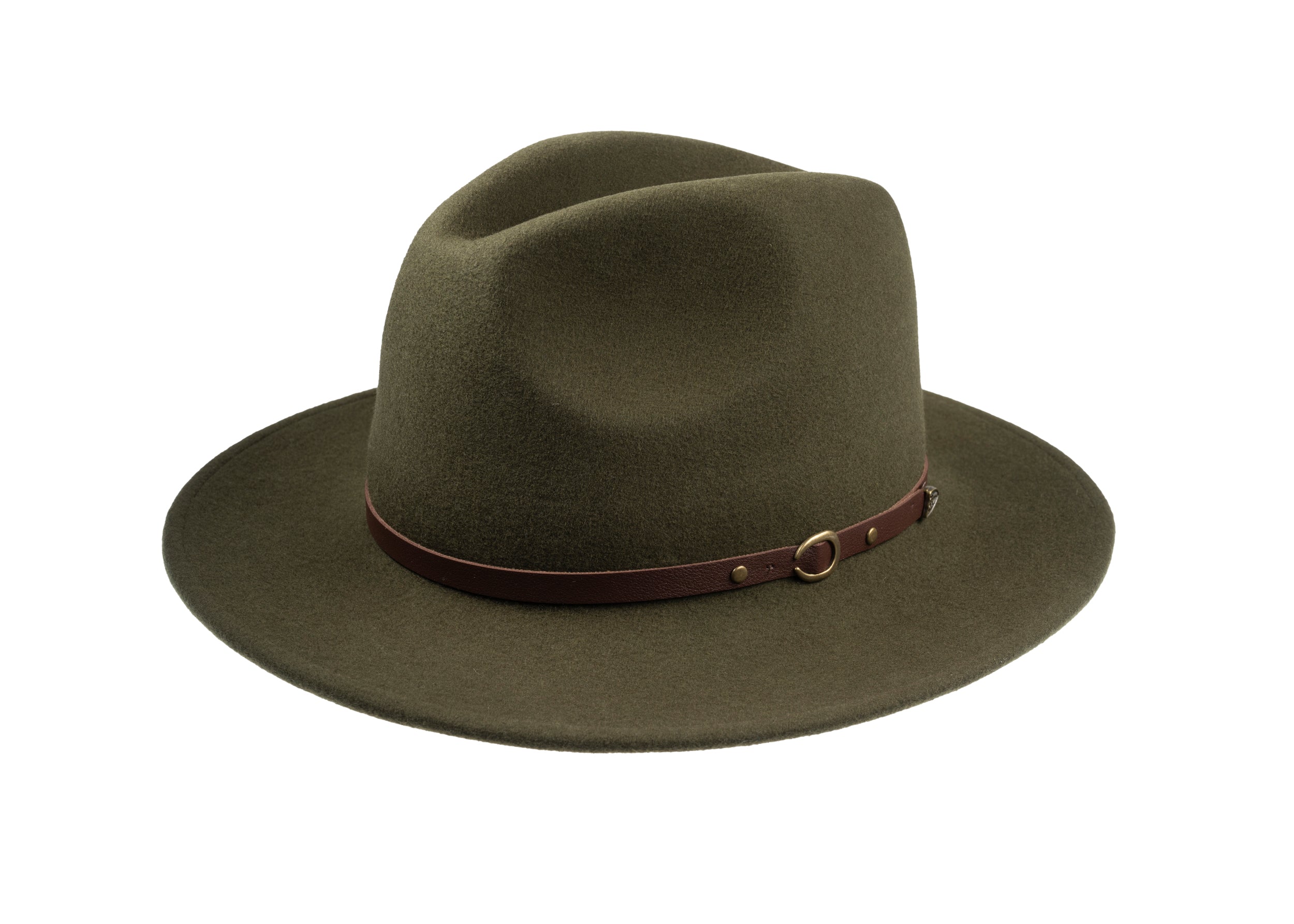
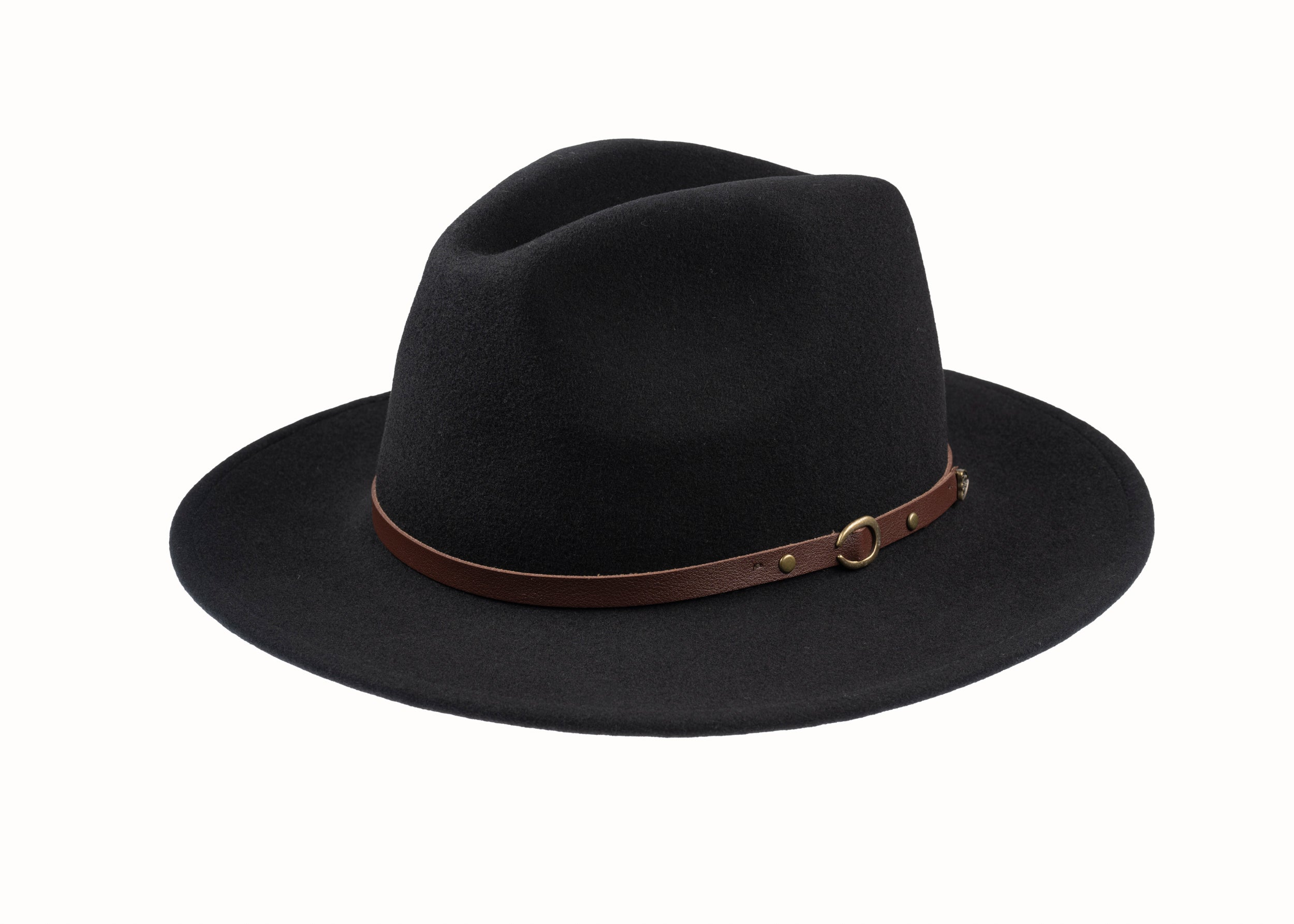
A structured felt hat with a defined profile is best worn or placed in a supportive box. A crushable style is different only when its product description expressly says it is designed to be packed. The Crushable Safari is one such example, made for packing and outdoor use; that resilience should not be extended to every felt hat.
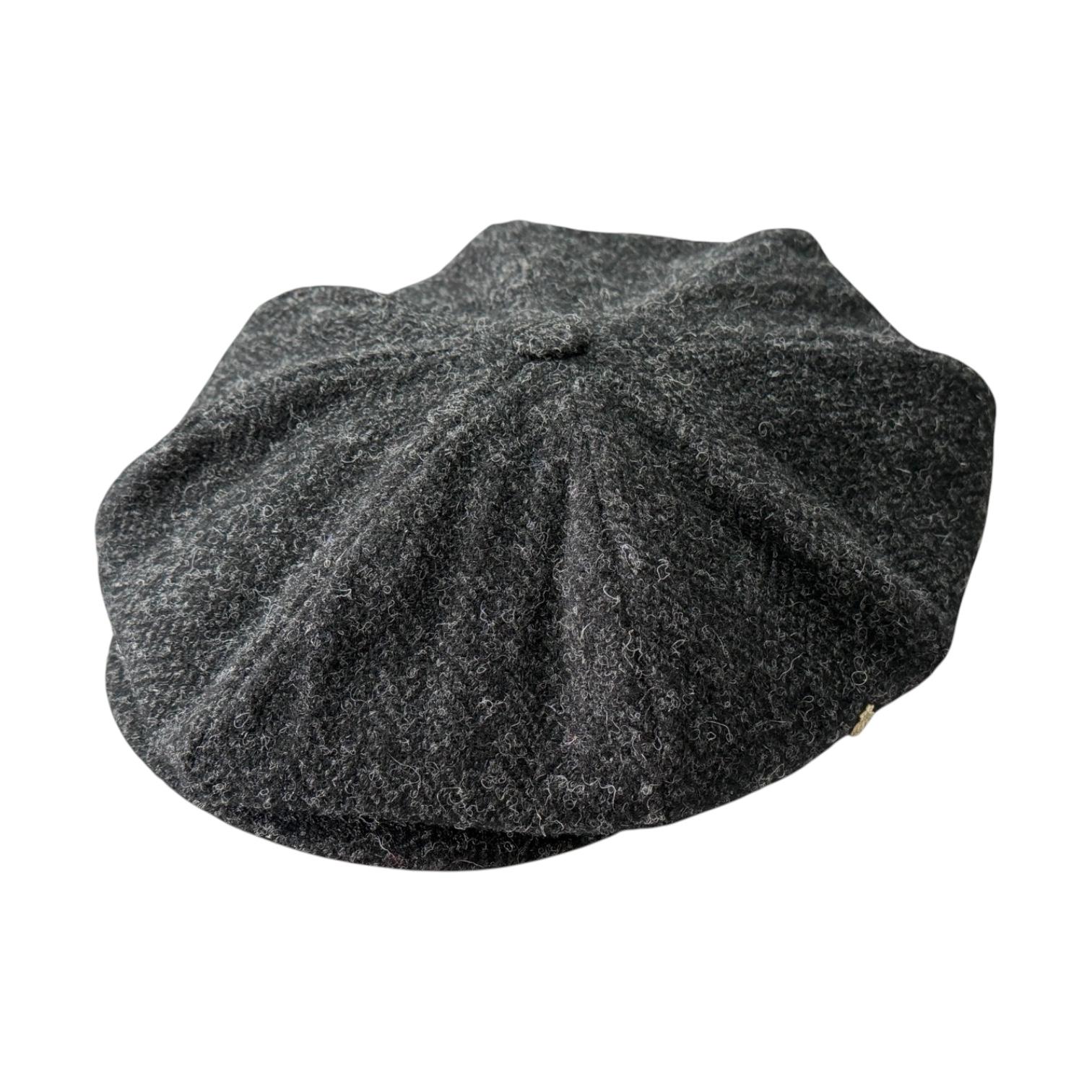
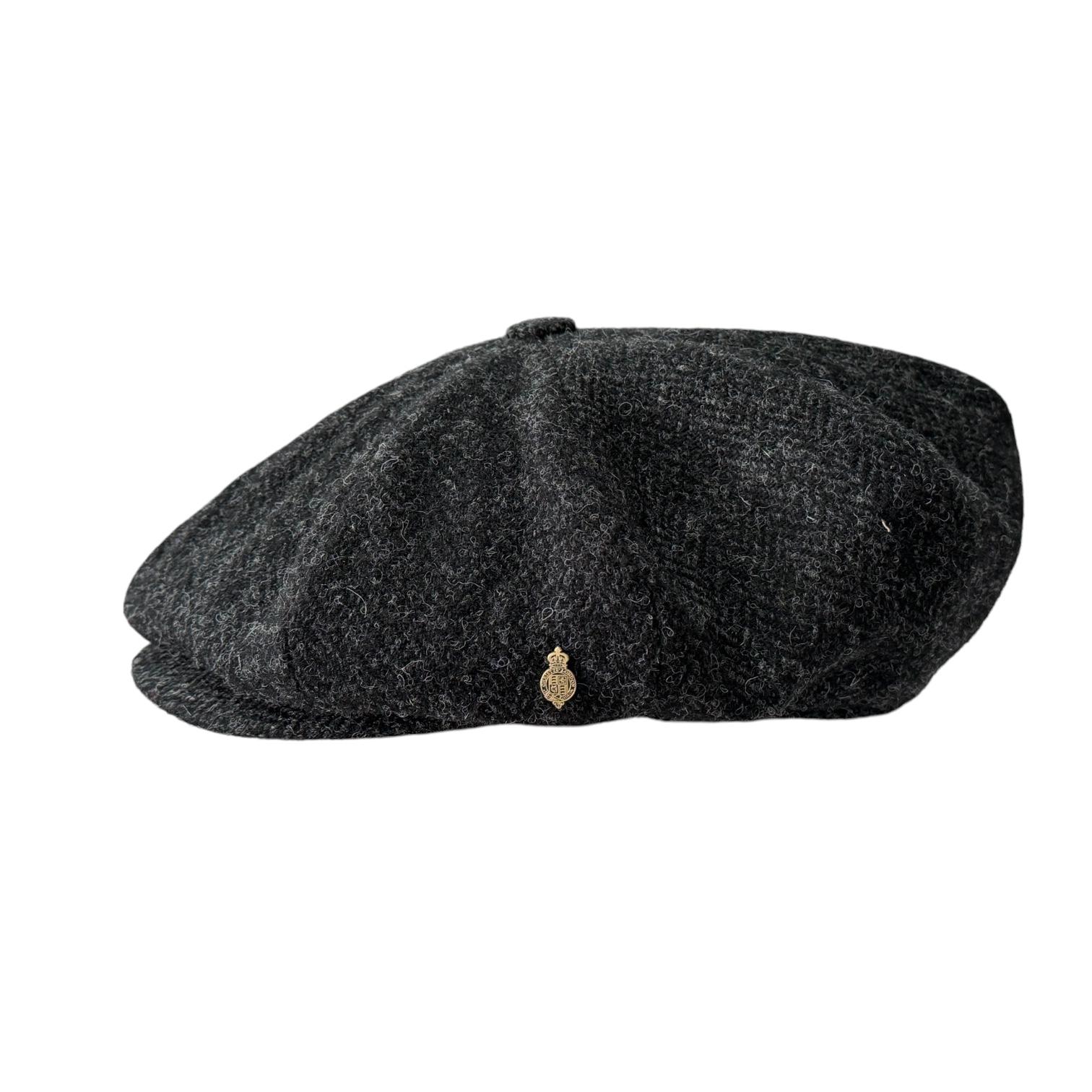
A pliable Panama, such as the Capri Panama, may suit warm-weather travel, but pliability is not permission to fold, roll or sharply crease it. Flat caps and bakerboy caps usually need less height, yet their peak and softly formed crown still need to remain clear of pressure.

Choose the container, add gentle support and keep pressure away
A box is protective only when it fits the individual hat. Christys’ standard box is intended for most hats not exceeding a 9cm width; a broad brim may need the wide-brim box, while a flat cap or bakerboy may suit the lower-profile cap box. These are useful starting points, not universal answers: compare the product description, brim measurement and crown profile before buying. An ill-fitting box can create the very pressure it is meant to prevent.
Place the hat so the crown and brim or peak rest naturally, with clean, breathable material used only to fill empty space. Gentle tissue or soft, clean fabric can support the inside of a crown without stretching it; use enough to prevent collapse, not enough to make the hat feel tight. Do not use heavy objects, improvised weights, tight stuffing or sealed plastic wrapping. Keep the lid, sides and neighbouring luggage away from the hat’s finished shape.
If a box is not practical for a short journey, use a firm, clean case or a suitcase compartment where the hat can lie undisturbed. Put clothing around the container as a buffer, never on top of an unprotected crown or brim. Keep shoes, toiletries, books and other dense items in separate sections. A cap should lie with its peak clear and unbent; do not fold the peak around the edge of a bag to save space. For a brimmed hat, support suitable areas of the brim rather than pinching the crown, following any designated handling guidance for that product.
Before closing the case, check three things: the hat is dry, no trim is caught, and nothing is pressing on the crown, brim or peak. Treat this as a pressure-free arrangement rather than a way to make the hat occupy less room. If the only available position requires bending the brim or compressing the crown, carry the hat differently or choose a more travel-tolerant style for this trip.

During the journey: keep the hat stable and dry
On a train, in a car or while waiting at an airport, keep the hat where you can see and control it. Avoid placing a brimmed hat under a seat, beneath a coat or beside a heavy bag. In a suitcase, keep the prepared container settled in position and stop clothing migrating into the crown. In hand luggage, protect the hat from laptops, books and hard edges, while following the carrier’s current storage requirements.
Felt needs protection from pressure and sudden heat. A formal blocked felt hat should remain in its intended profile, while a documented crushable felt style can tolerate only the packing method described for it. Allow it to rest rather than keeping it compressed longer than necessary. If felt becomes damp, do not seal it into a box; let it dry naturally at room temperature, away from radiators, fires, hairdryers, strong sunlight and other direct heat.
Panama and other straw hats need a lighter touch. The Capri Panama is woven in Ecuador from a Grade 1 woven hood and shaped and finished in England; its pliability helps it travel comfortably, but the finished trilby shape still deserves respect. Keep the weave free from sharp folds, pulled strands and pressure. Do not assume that water, steam, sprays or household cleaners are suitable unless the individual product guidance says so.
Tweed, wool and cloth caps can be easier to place in a small box or supported compartment, but the peak is a vulnerable point. Keep it flat in its intended curve, with no strap, book or garment pressing across it. A fuller bakerboy crown should not be flattened simply because the cap has a low overall profile. Material and construction decide the limit, not the size of the suitcase.
When you arrive, open the case and give the hat room before judging it. Remove any loose padding, lift the hat by suitable brim areas rather than pinching the crown, and place it in a dry, ventilated spot away from direct heat. Let felt, straw or cloth settle naturally at room temperature. A small change in position may ease as the hat rests; do not immediately force a crease, pull a brim into place or apply steam, water, ironing or household products without checking the individual care guidance.
If the hat became damp, leave it out to dry naturally before returning it to a closed box. If it has a fixed crease, persistent warping, cracked or damaged straw, a damaged band or stitching, a set-in stain, or a crown, brim or peak that will not return towards its former profile, stop home treatment and consult an experienced hatter or repair specialist. Good care reduces avoidable damage, but it cannot guarantee that every travel mishap will disappear.
Quick answers
Is it safer to wear, carry or pack a hat? Choose the option that leaves the least pressure on its construction. A formal structured hat is usually best worn or boxed, while a documented packable style may travel in the method its product description supports.
What should go inside the crown? Use only clean, gentle, breathable support that prevents collapse without stretching. For box choice, match the hat’s brim, crown and peak dimensions to the standard, wide-brim or cap box, ensuring the lid and sides do not touch the hat.
Can I put a wet hat straight into its box? No. Let it dry naturally first. Can I fold a Panama because it is pliable? Not unless the product guidance specifically permits that treatment.
When should I seek professional help? Stop home treatment after fixed distortion, damaged straw, damaged bands or stitching, set-in staining, or any shape that will not settle back towards its former profile.
A well-made hat is meant to be worn, including on the journeys that make a weekend or occasion memorable. Plan around its actual material and construction, keep pressure and moisture under control, and allow it to rest when you arrive. That calm routine will not make every hat indestructible, but it will help you travel with greater confidence and preserve the character that made you choose it.